The Borgo Cavour antiques market is a good reason to spend a Sunday in Treviso. On the fourth Sunday of the month, tables of antiques, vintage goods and collectibles take up stretches of Borgo Cavour and Via Canova. Set out from Porta Santi Quaranta or come over from the cathedral side, and leave yourself time to stop when a box of postcards or an unfamiliar object catches your eye. The Museo Luigi Bailo is on the same street, which makes it easy to build the rest of the day around the market.
For late 2026, the antiques dates are November 22 and December 27. The organizer also lists a separate pair of Christmas craft-market dates on December 13 and 20. The details below help you choose the right Sunday, approach the market on foot and buy something you can actually bring home.
When and where the Treviso antiques market takes place
The market’s Italian name, Mercatino dell’Antiquariato, del Collezionismo e del Vintage, tells you what to expect: antiques, collectibles and vintage goods in the same stretch of town. The regional cultural calendar lists it on the fourth Sunday of the month. It names Borgo Cavour and Via Canova as the streets that host the event and gives Borgo Cavour 58 as a reference address. Use that address to orient yourself, then look for the stalls as you get closer. An outdoor street market occupies more ground than a single address suggests.
For the end of 2026, the regional calendar and the organizer list November 22 and December 27 for the antiques market. The organizer separately lists Natale in Borgo on December 13 and 20. Those Christmas dates are for a craft and gift market. If a visitor says they went to “the market on Borgo Cavour in December,” ask which Sunday they mean before using their visit to plan yours. At the end of the month the emphasis turns back to antiques, vintage and collecting.
Check the organizer’s calendar close to the day and consult the Cultura Veneto listing for the location. When counting Sundays on your own, remember that the fourth and last Sunday are sometimes different dates. Use the listed date, especially when you’re planning rail tickets or the Sunday lunch that will anchor the rest of your day.
Start at Porta Santi Quaranta or walk over from the cathedral
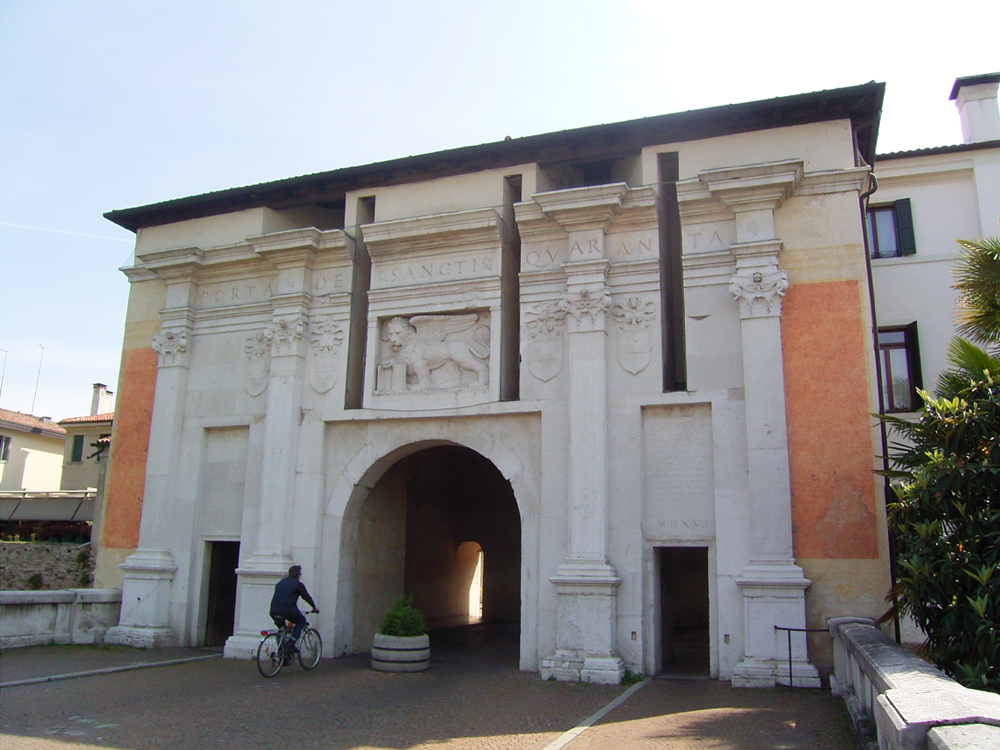
There are two useful ways to approach the market. Begin at Porta Santi Quaranta if you want a clear starting point at the western end of Borgo Cavour. The gate gives you somewhere recognizable to meet. It also puts the shopping in context. You go from a landmark at the edge of the old center to a street where people stop to inspect objects on folding tables. If you’re arriving from the cathedral area, approach along Via Canova and continue toward the gate. Either choice is easy to reverse if you spot something you want to revisit.
At the first tables, take a minute to adjust your pace. A walk across town has a destination and a fairly steady rhythm. Browsing an antiques market means stopping often, sometimes in awkward places, and taking a step back to make room for a shopper who can see something at the back of a table. If you’re visiting with friends, agree to meet by a landmark at a particular time. One person can look through a box of postcards while another walks on to the next stall. The day is easier when nobody is waiting behind someone else’s shoulder.
For more on the setting beyond the market street, read our guide to Treviso’s city walls. If you want the gate to be part of a longer visit, check whether your route along the walls still leaves enough time for the market. You can do a short stretch before the stalls and save the rest for a different afternoon. On a cold or wet day, this makes it easier to change plans when you’ve walked enough.
How early to arrive and how long to stay
Start in the morning if you collect a particular kind of object and want time to look carefully. The advantage is simply that you have more of the day to browse and can return to a table before you leave. If you’re traveling with someone who prefers walking or art to shopping, a shorter visit around lunch may be a better fit. Give yourself enough time to move slowly down the street once. Most of the visit’s pleasure comes from making a second look possible, so avoid booking an appointment immediately after your planned arrival.
An hour can work for visitors who want a look at the market and a short stop at a few tables. Set aside more time if you intend to compare several pieces, shop seriously or talk to dealers. Neither estimate is an event opening time. Availability and trading hours can vary, so check the organizer and leave a margin. In November, a late walk may also put the entire market visit into the coolest and darkest part of the day. If your itinerary allows it, browse before lunch and spend late afternoon somewhere indoors.
If you are coming from Venice by train, check your connections for Sunday and work backward from the market or museum visit you would most regret missing. Use the guide to a day trip from Venice to Treviso to put the city’s layout in context. For a short outing, choose either the market or the museum as the main reason for the trip. Then fit the second visit around it if time allows. A little spare time is more valuable than a third stop you can reach only by hurrying.
What to look for if you’re traveling with a carry-on
Paper is a good place to start: postcards, illustrations, small maps and other items that are easy to look at and easy to put away. The selection varies with who attends. If you find a postcard of a place you’ve seen in Treviso, look at both sides. The view on the front tells one story. A message, stamp or postmark can add another. Sometimes a card with handwriting is exactly what makes the object interesting. Sometimes you only want the image. Ask to see the back before buying either kind.
Small household pieces can also work if you consider their size and weight before paying. An object that feels light in your hand may be awkward to pack if it has a delicate handle or projecting edge. Think about where it would go in your bag. A flat item can travel between cardboard or the pages of a stiff notebook. A set of objects can take up more room than you expect once each piece has been wrapped. Buy what you actually want to own, and consider whether you’ll be able to carry it through the rest of your trip.
If you enjoy looking at textiles, inspect the edges and seams in daylight, as well as the part that first caught your attention. An embroidered initial or an old repair can be part of the appeal. The size and condition tell you whether the piece would work as you imagine at home. If you intend to use an object rather than display it, ask the seller about damage, wear and alterations. A good conversation about a small purchase can be as memorable as a more ambitious find.
Read the back, underside and edges before buying
The easiest way to miss something at a market is to look at an object only from the same angle as the dealer has displayed it. Start with the front because that’s what drew you in. Then ask whether you can examine the back or underside. On a photograph or print, look for information about the maker, photographer or printer. On a piece of ceramics, check the foot and rim. On a piece of wood, inspect the places where two parts meet. These details tell you where to ask questions even if you have no interest in becoming an expert.
Use neutral questions. Sa da dove viene? means “Do you know where it comes from?” È stato restaurato? asks whether it has been restored. A seller may know a lot about a piece, or may have bought it as part of a larger group with limited information. A short answer can still be enough to decide whether you like the object on its own terms. If an attribution or date is important to the price, take the time to ask what supports it. A verbal description and documentation are different things.
A small flaw can be acceptable if you know about it. Pick up anything fragile only after the seller says you may handle it, and use two hands. If you think you see a chip, ask and point to the area. Look again in good light before you make the decision. For something valuable, get a written description and keep the seller’s contact details and any paperwork. If you’re considering taking an older or expensive piece abroad, check the relevant export and import requirements before committing. There are plenty of easy purchases to make while you take time to understand a more complicated one.
Prices, payment and a second pass
Ask the price of an item in a way that makes clear which one you mean. At a table with similar objects, point to the exact piece. Quanto costa questo? will do. If several pieces caught your attention, ask whether the stated price is for one item or for the group. You can also ask if there is a price for two pieces together. A brief exchange is enough, and if it’s over your budget you can thank the seller and keep walking. The next table will give you something different to think about.
Bring a way to pay that suits small purchases, and ask each stall what it accepts. A card may be convenient, but the payment options can differ from one seller to another. If you need change for a note, ask before you hand it over. With a larger purchase, get a record you can refer to afterward. Before leaving the stall, check that everything you chose is in the wrapping, particularly if the deal was for multiple pieces. A second to check is easier than trying to find the same seller through a sidewalk full of tables.
If you want to think about an object, note the nearest doorway or shop sign. Market rows can look remarkably alike when you turn around. Give yourself a time to return and accept that the piece may have sold. For two shoppers traveling together, a short walk away is also a chance to compare impressions without feeling obliged to decide on the spot. If you’re still talking about the object ten minutes later and you know what you’d do with it at home, that is a better reason to return than the feeling that you ought to buy something on a trip.
Pair the market with the Museo Luigi Bailo
The Museo Luigi Bailo is at Borgo Cavour 24. It’s close enough to make the two stops part of one outing without turning the day into a race across Treviso. The Musei Civici di Treviso gives regular Tuesday through Sunday hours of 10 a.m. to 6 p.m. for the Bailo. Check the official site for your date, special events and any changes around holidays. Museum collections and temporary exhibitions are a different reason to visit, so look at what’s on and decide how much time you want to give it before you set a lunch reservation.
An easy sequence is market, lunch, museum. That works for a visitor who would rather buy and wrap an object before spending time indoors. You can also see the museum first if there is a particular exhibition you came for. Ask about bag policies if you will arrive with shopping or luggage. With a larger purchase, consider whether you can collect it later or leave it at your accommodation. You’ll be able to pay more attention to the art when you aren’t holding a parcel you’re trying to keep upright.
If only half your group wants to browse, the museum makes a convenient rendezvous point. Agree on whether you’ll meet outside or inside after the visit, and decide who’s carrying any shared bags. This may sound trivial until you are on opposite ends of the same street and one person has already paid for a ticket. It also gives everyone permission to spend the morning on what interests them. Compare finds over lunch. The person who saw one exhibition may have as much to say as the person who looked through twenty boxes of postcards.
A November or December Sunday without rushing
A good cold-weather outing has room to warm up. Get coffee before the first stretch of browsing if you start early. Take a lunch break before you feel the cold in your hands. If you plan to shop after lunch, confirm the market is still operating and pick a short list of tables you want to revisit. This lets you enjoy the purchase instead of treating every remaining hour as browsing time. After that, you can make a smaller loop toward the cathedral or back to the gate.
In December, remember that the craft markets and the antiques date offer different reasons to be on the same street. If you want a gift from a maker, the organizer’s Natale in Borgo dates may be the better choice. If you are curious about vintage objects or want to talk to a dealer, choose the antiques Sunday. A couple of specific dates on your itinerary will help more than a general note that Treviso has markets in December. Check once more before the trip, especially if a holiday is close to your preferred date.
If you have another day in town, consider a private Treviso walking tour separately so you can spend market day at your own pace. The market is a good place to get interested in the object in front of you. An urban walk gives that curiosity somewhere else to go, from the city gate to the streets that meet around the cathedral. If you bring someone back to town on a day without the market, the street and museum will give you a more permanent way to show them where you went.
Visiting with someone who browses at a different pace
Think about how your group wants to use the street before you arrive. A serious collector may spend twenty minutes on a single table, while a child may be ready to move on after looking at three objects. Give the collector a little time alone and take the rest of the party toward the gate or a coffee stop. Agree on when and where to meet again. With a compact Sunday route, you can split up for a short while and still share the part of the day that matters to everyone.
If someone in the group needs to avoid crowds or stand for only short intervals, begin with one stretch rather than committing to the entire route. A table can make a narrow section feel narrower when several people want to stop at once. Keep an eye out for places to get out of the flow, and check the museum’s official accessibility information if it’s part of your afternoon. For a first visit, two or three good conversations at the stalls and some time in the neighborhood can be enough. You can leave while you still feel like looking at the last piece you bought.
A practical route for a first visit
If you arrive in the historic center on foot, make the cathedral area or the gate your starting landmark and put the other one at the far end of the walk. Give yourself a few minutes at the first stalls to see what people have brought. You’re likely to find that the list you imagined at home doesn’t match the day’s selection. That is part of browsing. Take a photo of a street sign if you need a reference point, or make a quick note of where you saw something. Ask first before photographing a stall or a person.
For lunch, pick a meeting place outside the most congested section of the market street. Confirm the restaurant’s Sunday service and give whoever walks more slowly a fair amount of time to get there. If a friend wants to go back for a last purchase, agree to meet at the table instead of bringing the whole party. After lunch, decide whether your remaining time is best spent at the Bailo or walking around central Treviso. The market makes a good part of a day partly because the other pieces are close enough to choose as you go.
Keep the purchases manageable on the trip back. Put small paper items where they can stay flat, and keep a receipt separate from anything you may unwrap later. If you have arranged to collect a purchase after lunch, get the precise stall location and agree on a time before leaving it. For all the pleasant uncertainty of an antiques market, the part where you meet people and find your way home can be very simple. That leaves your attention where it belongs, on the things people bring out on a Sunday in Borgo Cavour.
Featured photograph of Porta Santi Quaranta by Franco via Wikimedia Commons, under CC BY 2.0.
Frequently asked questions
When is the Borgo Cavour antiques market in Treviso?
The market normally takes place on the fourth Sunday of the month. The organizer lists November 22 and December 27 for the final two 2026 antiques editions. Check its calendar before traveling.
Where is the Treviso antiques market held?
The event takes place around Borgo Cavour and Via Canova in Treviso’s historic center. The regional listing gives Borgo Cavour 58 as its reference address.
Is the Borgo Cavour Christmas market the same event?
The organizer lists Natale in Borgo separately as a craft and holiday gift market on December 13 and 20, 2026. The December antiques edition is listed for December 27.